
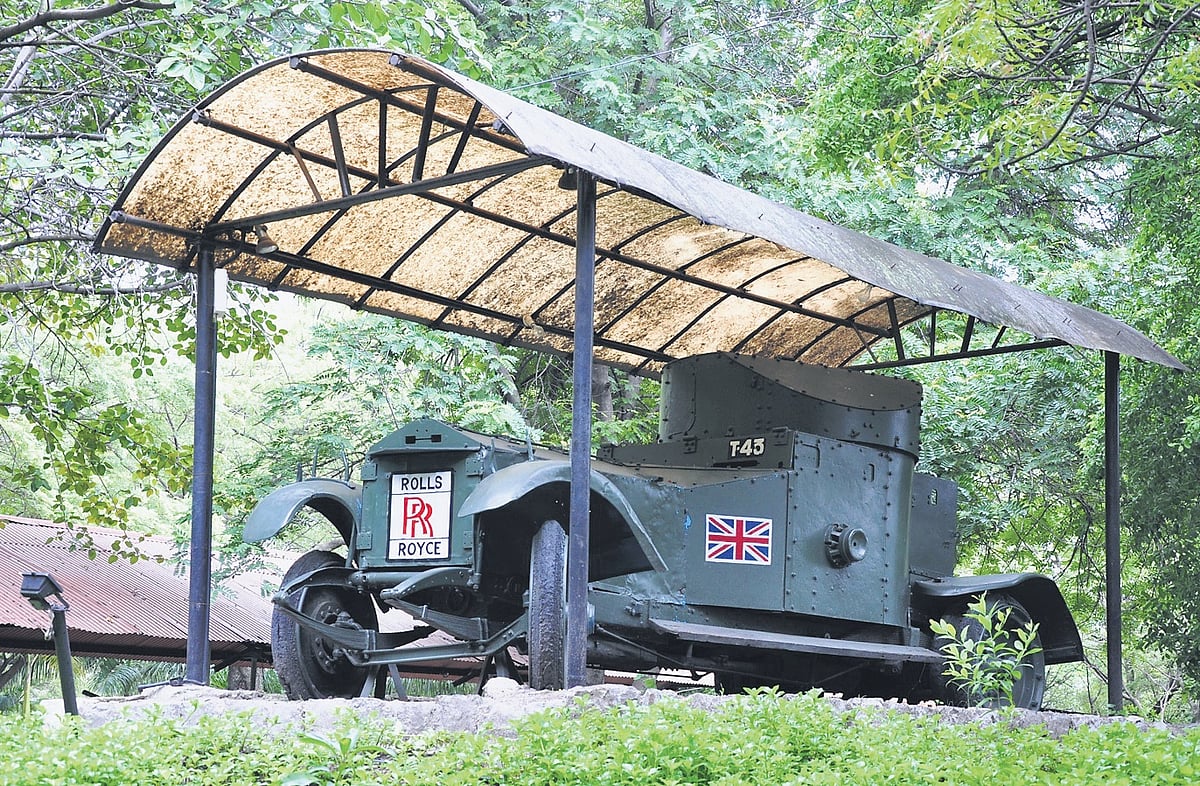

The first official photograph ever of a tank in action is at the Battle of Flers-Courcelette on September 15, 1916. A Mark I tank with a steering tail at the rear of the vehicle. These were lumbering machines and only 25 of the 49 tanks moved forward to attack the Germans. Tanks treads have come a long way since, taking a detour through Ahmednagar, Maharashtra, where the Cavalry Tank Museum stands amidst green manicured lawns. Established by the Armoured Corps Centre and School, Ahmednagar, it turned 30 this year and is the only one of its kind in Asia.
The museum tells battle stories that begin a century ago: the Battle of Cambrai, the Somme, and Flanders. The First World War Battle of Cambrai in 1917 on French soil where the British mounted its offensive against the Germans, it exposed the defects in the 28 tonne Mark IV tank. In a way, Cambrai was a turning point in tank warfare when the British realised that armoured warfare needed to be upgraded to become redoubtable fighting machines in later wars.
The Mark IV was a disaster at the Somme where 2,06,000 British soldiers died; in Flanders the weight and size of the tanks caused them to ditch in the mud. Both Somme and Flanders were turning points in the history of the British Empire: the “flower of England’s youth” perished there, betrayed by the tanks the Army had such faith in. Ironically these defeats led to the development of bigger and better tanks—such as the two Churchill Mk VIIs which were used to devastating effect against the Nazis. These are on show here, as is the Nazi German Schwerer Panzerspähwagen light-armoured car, which was no match for a Churchill or Matilda aka Infantry Mark II which are exhibited at the Cavalry Museum.


