How Does Selective Soldering Benefit Complex Flexible Printed Circuit Board (PCB) Manufacturing Processes?

Flexible Printed Circuit Board (PCB) Manufacturing Processes
The PCB industry has been rapidly evolving over the last decade as a result of advancements in digital technology. As circuit boards have evolved to include smaller components with finer pin pitches, manufacturing processes have had to undergo substantial refinement to ensure that these tiny parts are properly soldered. As a result, many manufacturers are turning to selective soldering as a valuable tool for improving production efficiency and quality.
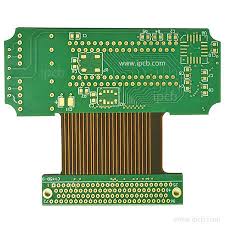
Flex printed circuit board (PCB) is an electrical circuit that uses thin copper traces on a polyimide substrate to form the conductor layer. They are flexible, lightweight and can be bent or twisted without losing their electrical connections. They are used in a wide variety of electronic products, from calculators and cell phones to printers and LCD televisions. They are also used in the medical industry for heart monitors and hearing aids, and in a range of industrial and military equipment such as robot arms and processing machines.
When fabricating a flexible printed circuit board, the conductor pattern is designed to be resilient against the stresses that come from repeated bending or folding of the circuits. This is achieved by using thinner copper traces and adding a flexible dielectric coverlay, usually made of Kapton or polyester films, which offers insulation and protection. A solder mask coats the conductor pattern for corrosion resistance, and hot air solder leveling (HASL) or other surface finishes are applied to exposed pads. In multilayer constructions, additional dielectric stiffening layers can be added to prevent flex PCB wrinkling or buckling during use.
How Does Selective Soldering Benefit Complex Flexible Printed Circuit Board (PCB) Manufacturing Processes?
Selective soldering is a process that directs a precise wave or drop of solder to targeted areas of the PCB, which minimizes heat damage to components near soldering sites. The process is also ideal for mixed-technology boards that feature both SMD (Surface Mount Devices) and through-hole components.
Selective soldering involves a number of different steps, including cleaning the surfaces of the PCB, applying a flux, and then applying a low-temperature solder coating. These coatings help to ensure a high level of soldering quality and consistency. Moreover, they reduce the need for manual soldering during repairs or modifications to existing assemblies.
The key benefit of selective soldering is that it enables the manufacturer to control both flux deposition and the flow rate of liquid solder. This enables the manufacturer to optimize the temperature of each assembly for maximum reliability and quality. Selective soldering systems use a unique combination of hardware and software to accurately measure both the amount of flux being applied and the flow rate of each nozzle. This gives the manufacturer a higher level of quality and process control, which ultimately leads to reduced production costs and improved yields.
To further improve quality and process control, many selective soldering systems utilize nitrogen as an inert gas for their soldering process. This eliminates oxygen, which can react with the liquid solder and cause quality problems. Nitrogen can be purchased in pressurized bottles or liquid nitrogen tanks, or a manufacturer may choose to generate it on-site.