Flexibility of a Flex Circuit
A flex circuit is used in place of wires and cables. It carries signals from and to components, and is used in many products such as cell phones, medical equipment, bar code scanners, robotic arms and car seats. It has a variety of benefits including cost savings, simplified system design and assembly time reduction.
The key factors that affect the flexibility of a flex circuit are the amount of bends it can tolerate, the number of layers, and the type of material that is used for the base layer. The amount of bending required will influence the thickness of the base layer. A thinner base material will be easier to bend than a thicker one. A flex circuit with multiple layers may require a stiffener, which is a rigid part laminated to the flex circuit to provide mechanical stability. A stiffener can also be placed over areas of the flex circuit that are expected to experience high stress, such as a connector or mounting hole.
Thinner dielectric substrates make a flexible circuit much more lightweight than a rigid board and allow for a smaller package size. They are especially useful in space-constrained applications where the addition of a rigid board or cables would add considerable weight and bulk to the product.
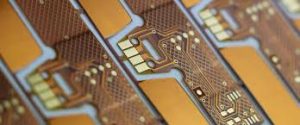
Key Factors Affecting the Flexibility of a Flex Circuit
The most common substrate materials for a flex circuit are polyimide and polyester films, although glass fiber and epoxy are also used. They are coated with a coverlay film, which insulates the conductors on the outer surface of the flex circuit, and protects them from corrosion. The insulating material is typically created with a layer of PI or PET, and can be printed with a solder mask or flexible solder mask ink.
Pad fillets are a common way to reduce stress on the flex circuit. They improve etch yield and material strength, and are particularly important when the pad diameter is greater than the connecting strand width. Plated through-holes are another method of reducing stress. Ensure that the through-holes are placed away from the copper edges, and that the pads and land termination locations have sufficient clearance.
Other key factors that can affect the flexibility of a flex circuit include the type and number of layers, the type of plating, the thickness of the base layer and the IPC class for the flex circuit. Choosing a higher IPC class will increase the cost of manufacturing, but may be necessary to meet a product’s requirements for reliability. The use of blind or buried vias can also increase the complexity and the cost of the flex circuit.
The IPC class determines the number of coupons needed for the flex circuit to be validated, which in turn influences the minimum acceptable tolerance for the trace width and height. A flex circuit with a tighter tolerance will be easier to bend, but can be less reliable. It is also important to consider the type of metal used in the plating process. The use of a nickel/gold (Ni/Au) alloy will be more expensive than using an aluminum alloy, but it provides better corrosion resistance and temperature stability.