

Piano Translation and Piano Transcription
Piano transcription is a musical form that involves the creation of sheet music from an original piece of recorded music. This process often requires the use of music notation software to reduce the sound file to the actual note values that will be played on a piano. Musicians that create and play piano transcriptions often work from recordings of classical music or other pieces that have already been transcribed for another instrument.
Some examples of music transcription include converting an orchestral composition into a solo piano piece, or converting a jazz improvisation into sheet music for other musicians to read and play. Transcription can also be used to notate the sonic qualities of other sounds that have been captured on recordings, such as animal vocalizations or natural sounds. The goal of a musical transcription is to provide the musician with the music notation that will allow them to play the recording in a way that will accurately represent the composer’s intentions for the piece.
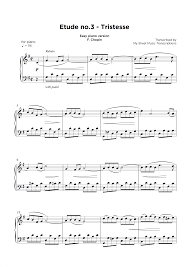
Creating sheet music is a skill that can be learned through the study of musical theory and by practicing with a metronome, which is a device that produces audible ticks to help a musician keep their beat. In addition to learning the basic notation symbols, musicians need to understand how long each note should be played for in order to reproduce the composer’s intention. This includes understanding the various dotted notes and other symbols that can indicate different note durations, such as a slur, a trill, and a glissando.
https://tartalover.net/nicole-pesce
What is Difference Between Piano Translation and Piano Transcription?
Another important aspect of a pianist’s transcription skills is the ability to recognize chords and melodies. This can be a difficult task, especially for beginners, but it is essential to developing their musical expression and achieving a high level of performance. In order to learn how to interpret these symbols, it is helpful to work in small chunks. This could be one bar, two bars, or even a single beat. This will help the musician avoid getting lost and save time and mental energy.
https://m.youtube.com/@tartalover2682/videos
A good knowledge of the chromatic scale is also useful to someone who is transcribing piano music, as is an understanding of key signatures and other musical nuances. For example, the tonic, which is usually indicated by a number printed above a particular tone, is the most important key in any given scale. The next tonic is the key that is a half-step lower. If a piece of music is written in a key that is too high for the piano to play, it will have a flat symbol above it.
Piano transcription can be tricky because it is often a piece of music that was originally composed for another instrument. Some instruments, like trombones, cannot produce both the melody and bass lines, and so will only be transcribed as the melody line. Others, such as harpsichords, are capable of producing both the melody and bass parts and can therefore be transcribed as a full score.


