types of Flexible circuit board
Prototyping lies at the heart of innovation in electronic design, providing engineers and developers with the opportunity to test concepts, validate designs, and iterate rapidly towards a final product. In the realm of flexible electronics, where versatility and customization are paramount, the availability of diverse circuit board options tailored for prototyping plays a crucial role in accelerating the development process. Let’s delve into the types of flexible circuit boards commonly offered for prototyping purposes.
One of the most popular choices for flexible circuit board prototyping is the single-sided flexible circuit board. Characterized by a single conductive layer sandwiched between flexible insulating substrates, these boards offer simplicity and cost-effectiveness for exploring basic circuit designs and proof-of-concept projects. Single-sided flexible PCBs are ideal for applications where space constraints and lightweight form factors are priorities, such as wearable electronics, medical devices, and automotive sensors.
For more complex designs and higher circuit density, double-sided flexible PCBs provide enhanced functionality and flexibility. These boards feature conductive traces on both sides of the substrate, allowing for greater routing options and component placement flexibility. Double-sided flexible PCBs are well-suited for prototyping applications requiring increased signal integrity, reduced electromagnetic interference (EMI), and improved thermal management, making them a preferred choice for advanced electronic systems and consumer electronics.
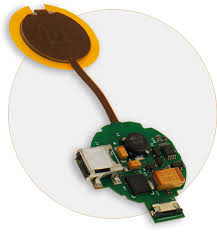
What types of Flexible circuit board do you offer for prototyping?
In situations demanding utmost reliability and performance, multilayer flexible PCBs offer unparalleled versatility and functionality for prototyping intricate designs. By incorporating multiple conductive layers interconnected through vias and plated through-holes, these boards enable designers to implement complex circuit architectures, impedance matching, and signal shielding while maintaining the flexibility inherent to flexible substrates. Multilayer flexible PCBs are indispensable for prototyping high-speed digital circuits, RF/microwave applications, and sophisticated electronic assemblies.
Another option gaining traction in the realm of flexible circuit board prototyping is the rigid-flex PCB. Combining the advantages of rigid and flexible substrates, these hybrid boards offer a unique blend of structural stability and bendability, making them ideal for applications requiring a combination of rigid and flexible elements. Rigid-flex PCBs enable designers to integrate components and connectors directly onto the flexible sections, minimizing assembly steps and enhancing overall reliability. They find applications in aerospace, defense, and industrial sectors where robustness, miniaturization, and durability are paramount.
In addition to standard circuit configurations, manufacturers often offer customizable options tailored to specific prototyping requirements. This includes variations in substrate materials, copper thicknesses, surface finishes, and solder mask colors to accommodate diverse design preferences and performance specifications. Customizable features extend to fabrication techniques like laser cutting, selective plating, and impedance control, allowing engineers to fine-tune prototypes for optimal performance and functionality.
Moreover, rapid prototyping services leveraging advanced manufacturing technologies like additive manufacturing (3D printing) and laser direct structuring (LDS) enable accelerated development cycles and reduced time-to-market for innovative concepts. These services offer unparalleled flexibility in material selection, design iterations, and production volumes, empowering designers to explore novel ideas and iterate quickly without the constraints of traditional fabrication methods.
In conclusion, the range of flexible circuit boards available for prototyping spans a spectrum of options tailored to the diverse needs of electronic designers and developers. From single-sided prototypes for basic proof-of-concepts to multilayer and rigid-flex configurations for advanced applications, manufacturers offer a plethora of choices to expedite innovation and drive progress in flexible electronics. By leveraging these versatile prototyping solutions, engineers can unleash their creativity, validate designs efficiently, and pave the way for groundbreaking advancements in electronic engineering.